Escapements
Verge, anchor, dead-beat, gravity, cylinder, duplex, lever and chronometer escapements from Brown's 1868 book, each a physics simulation in your browser.
An escapement lets a clock's weight or a watch's mainspring run down one tooth at a time, and gives the pendulum or balance a small push on each beat. Brown's index lists 31 escapements: Nos. 234, 238, 288 to 314, 396 and 402. They run from the verge and crown wheel (No. 234) to the lever and chronometer escapements of his own time.
Brown sets the recoil escapement (No. 288), whose wheel is pushed back slightly at every beat, beside the dead-beat or “repose” escapement (No. 289), whose wheel stands still while it is locked. He includes gravity escapements, such as Mudge's (No. 309), where a falling pallet gives the impulse. He also shows watch escapements: the cylinder, duplex, lever and chronometer.
On this site each escapement has a single drive: a constant torque on the escape wheel, standing in for the weight or mainspring. The pendulum, balance or verge is not driven; it swings only because the teeth push it. Pendulum clocks run under gravity. Several watch escapements are shown in plan, with gravity switched off and a balance spring (see each page). Each page reports what was measured. For example, No. 303's pendulum beats every 0.891 s, against 0.882 s from the compound-pendulum formula.
The 31 working models
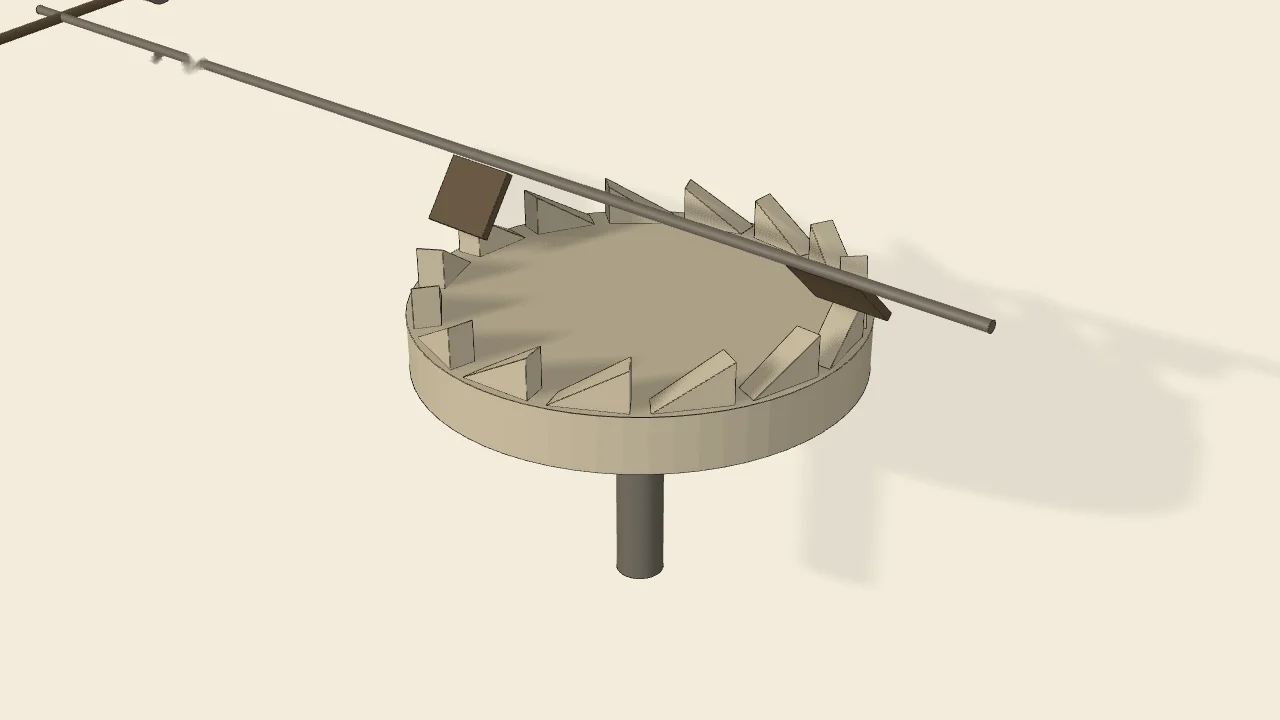 234. Verge escapement
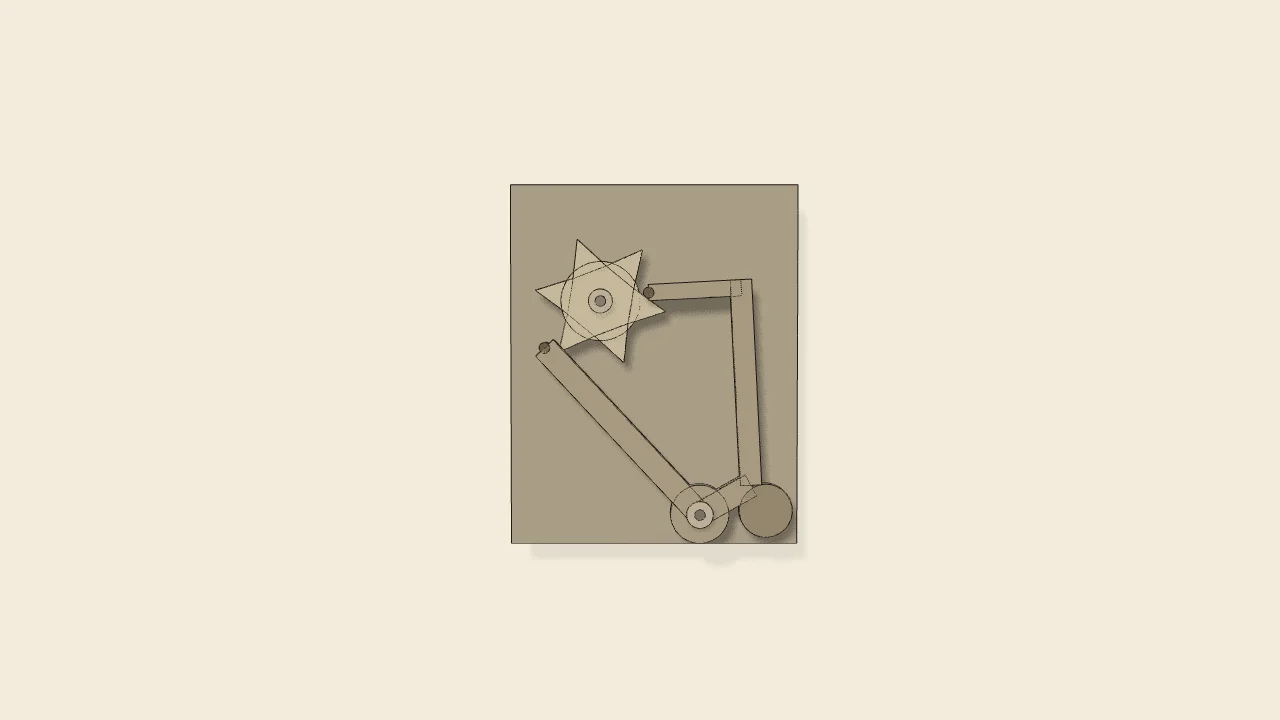 238. An escapement
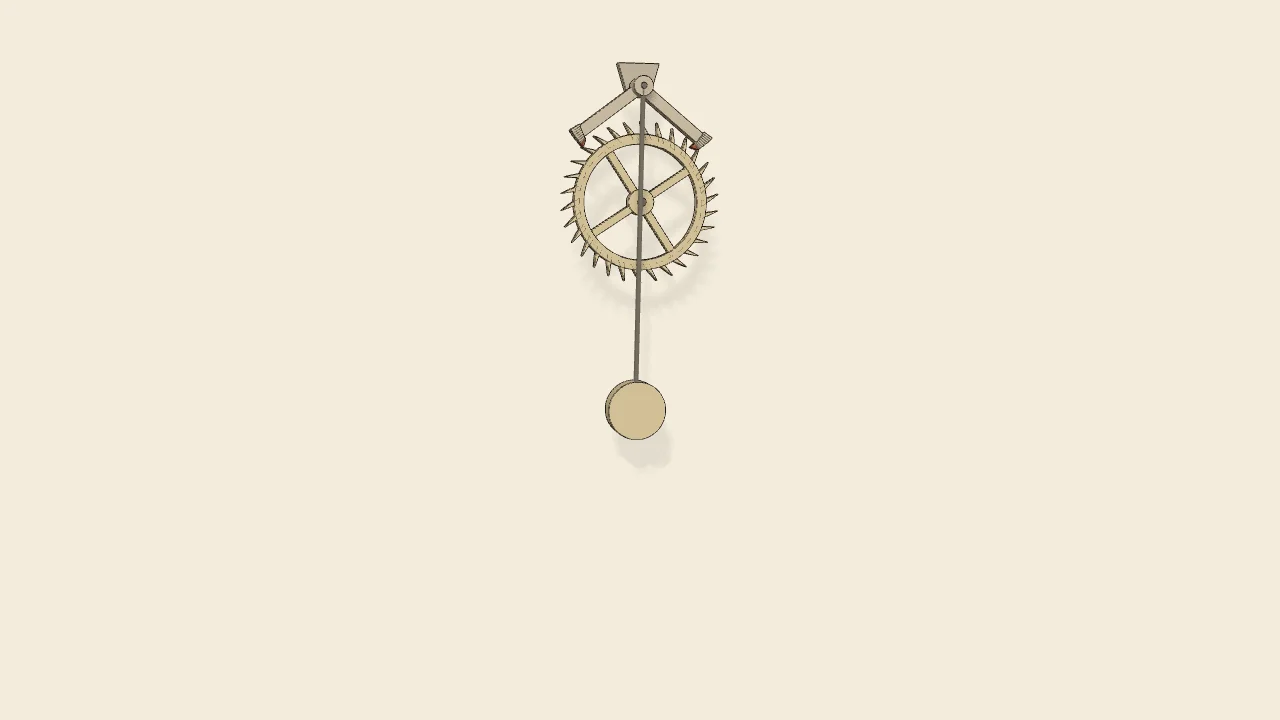 288. Recoil escapement
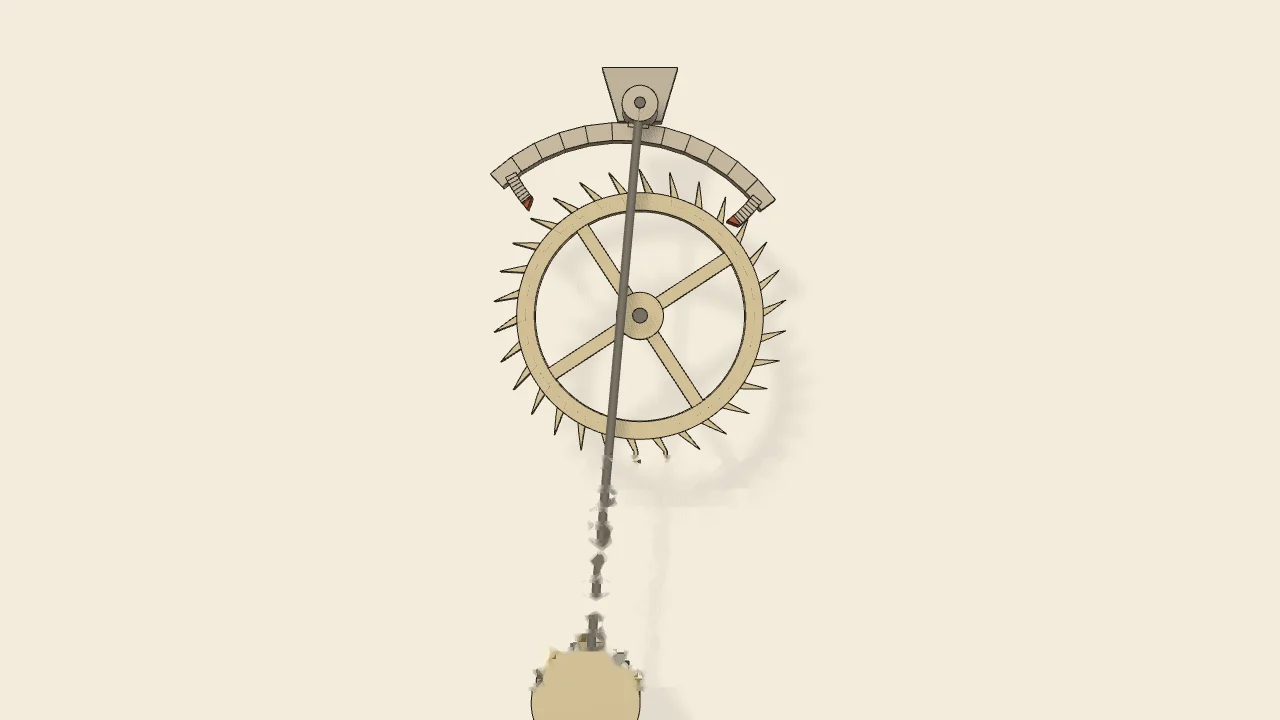 289. Repose or dead-beat escapement
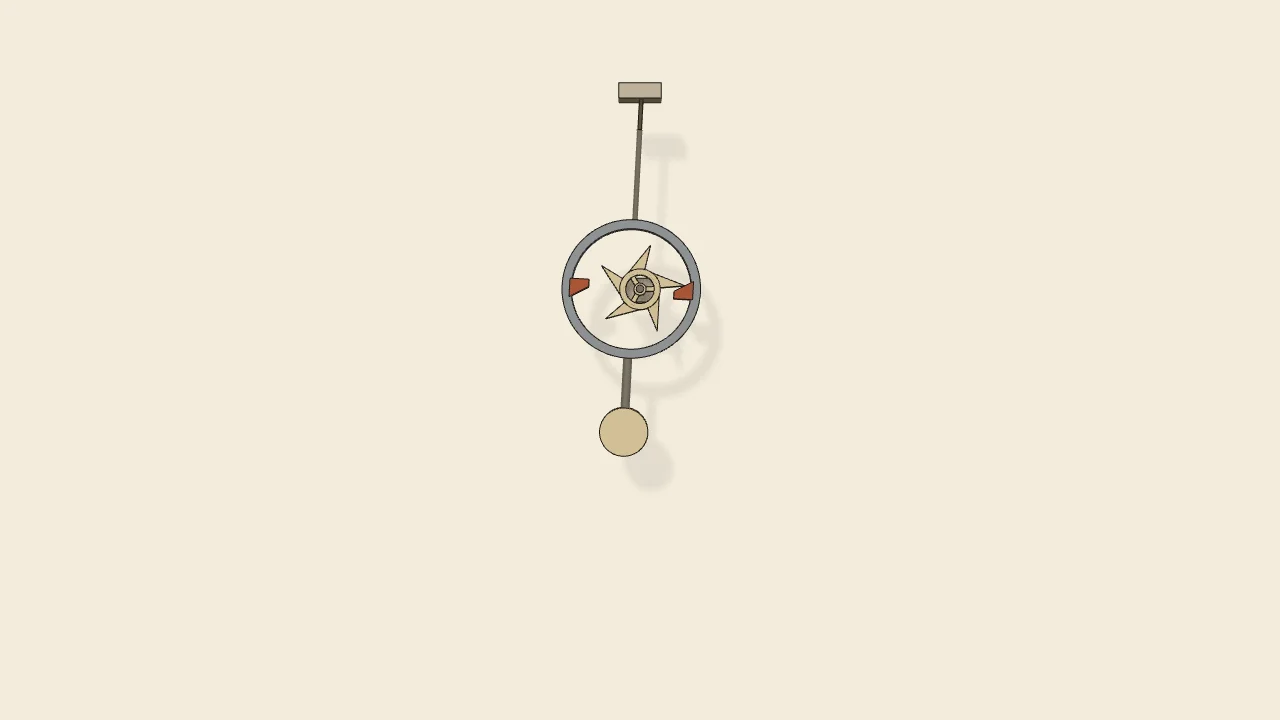 290. Another kind of pendulum escapement
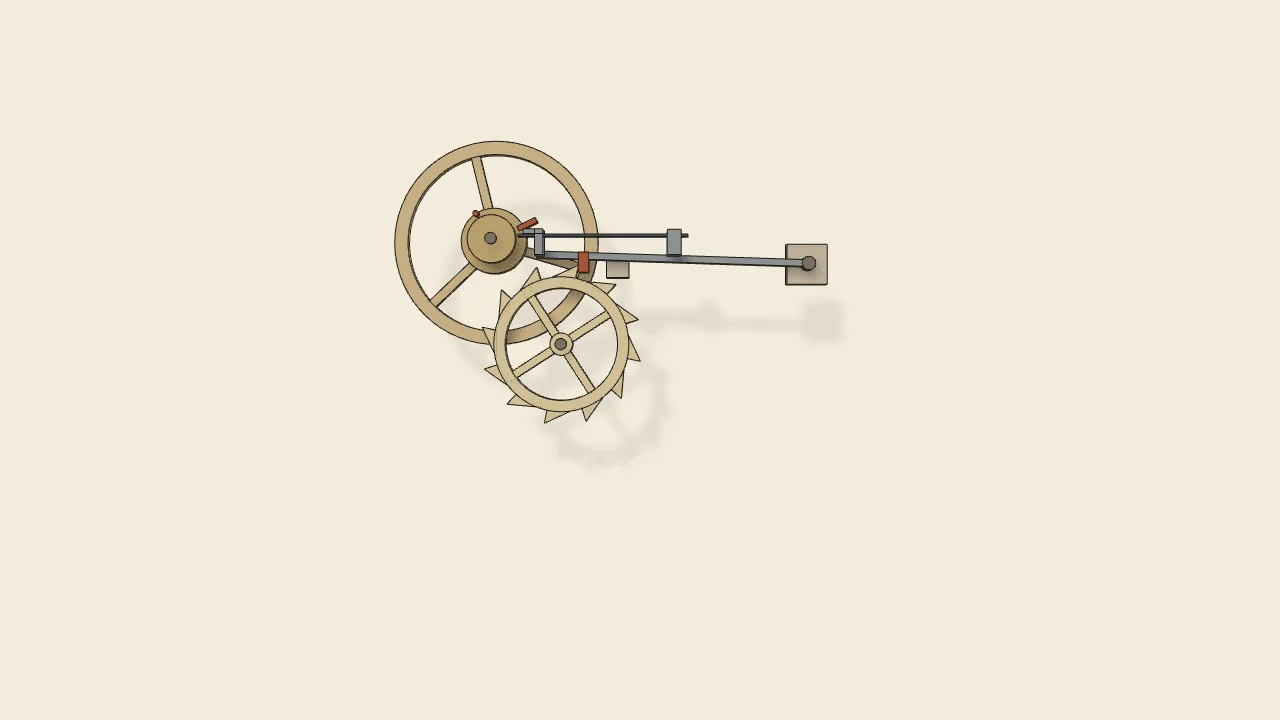 291. Arnold's chronometer escapement
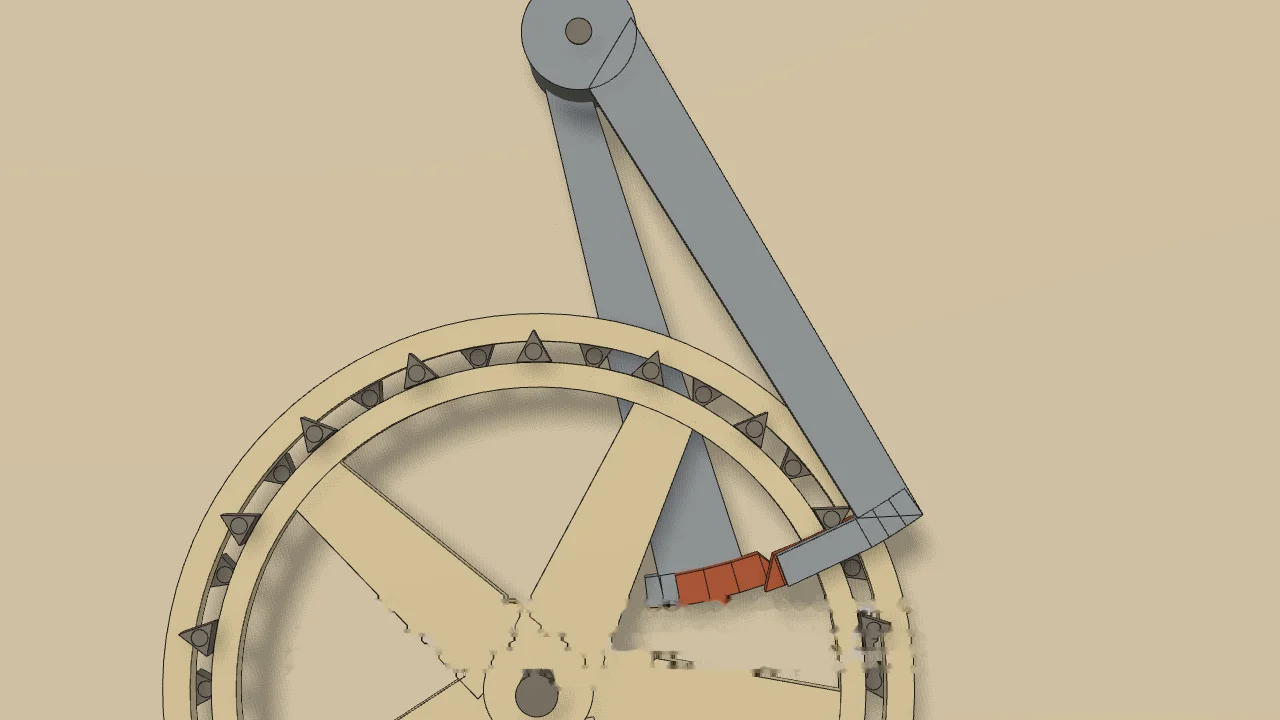 292. Stud escapement
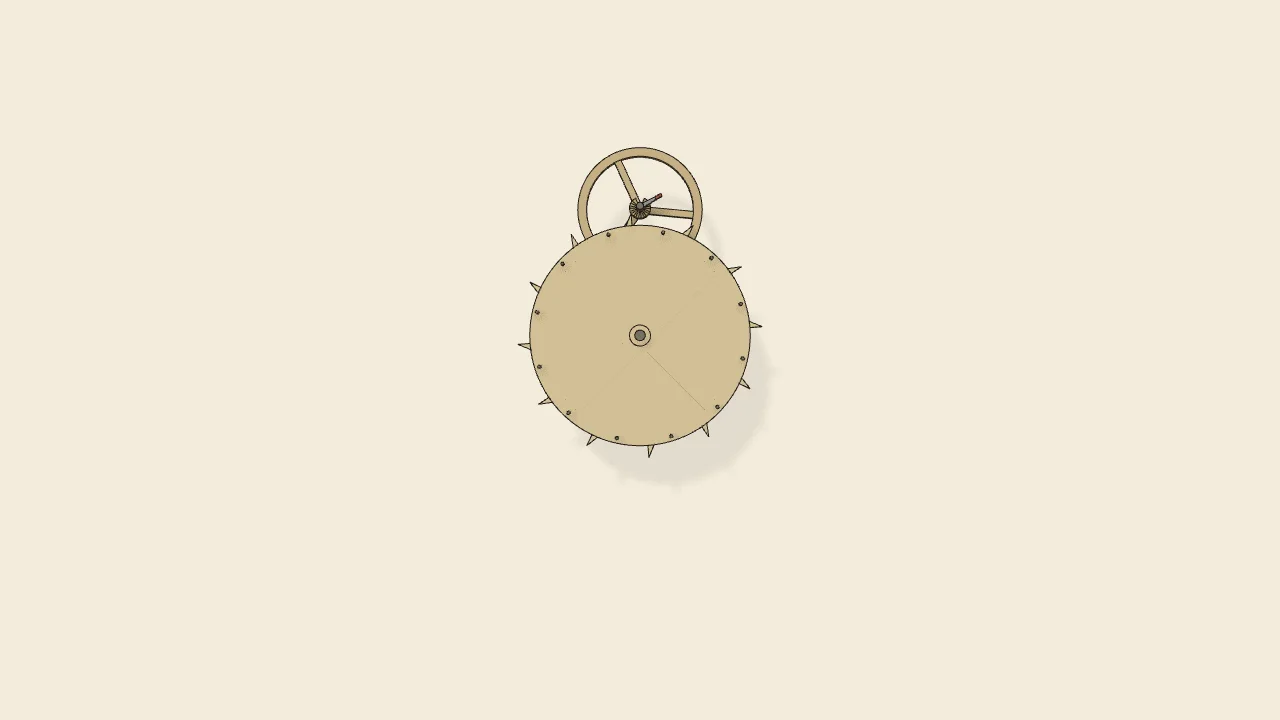 293. Duplex escapement
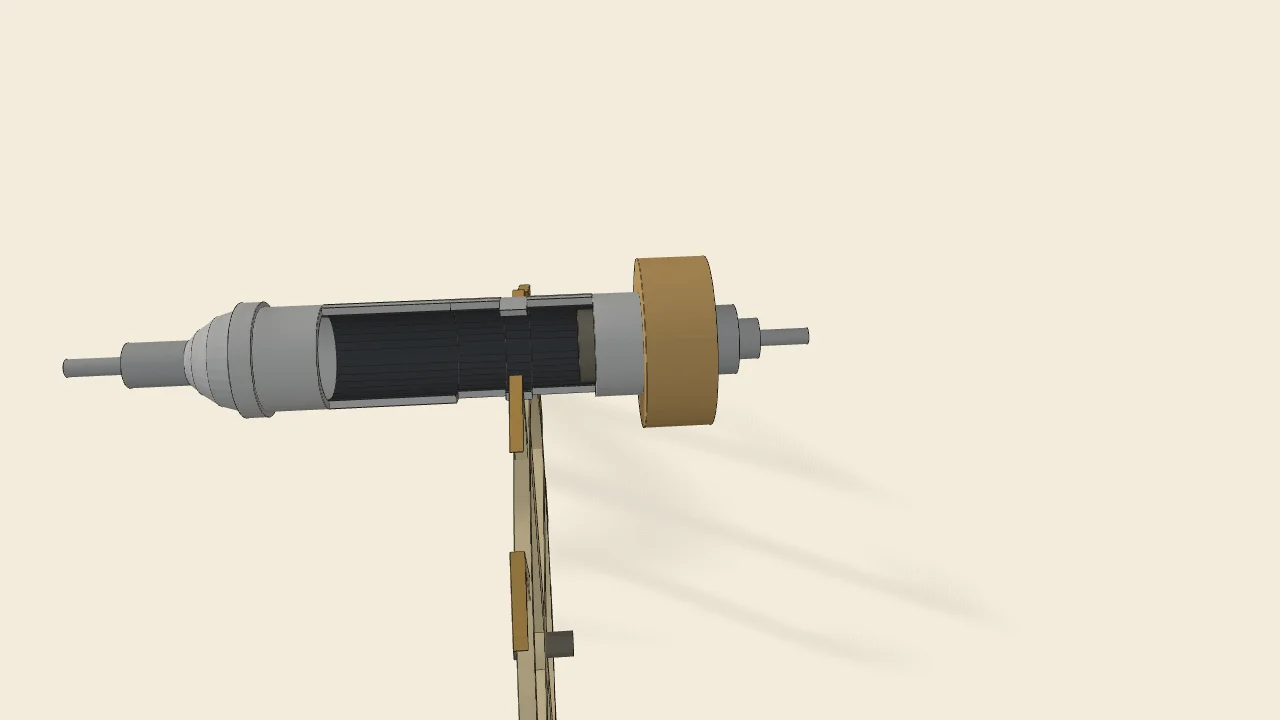 294. Cylinder escapement (perspective)
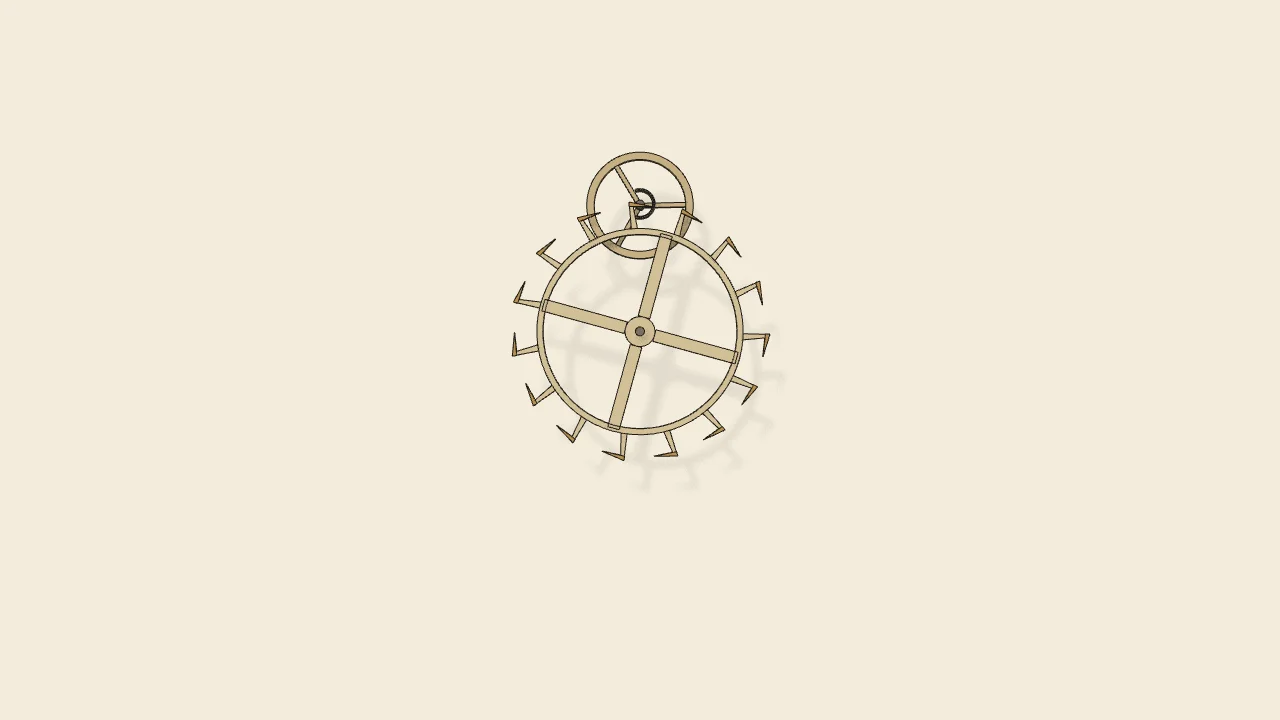 295. Cylinder escapement (wheel detail)
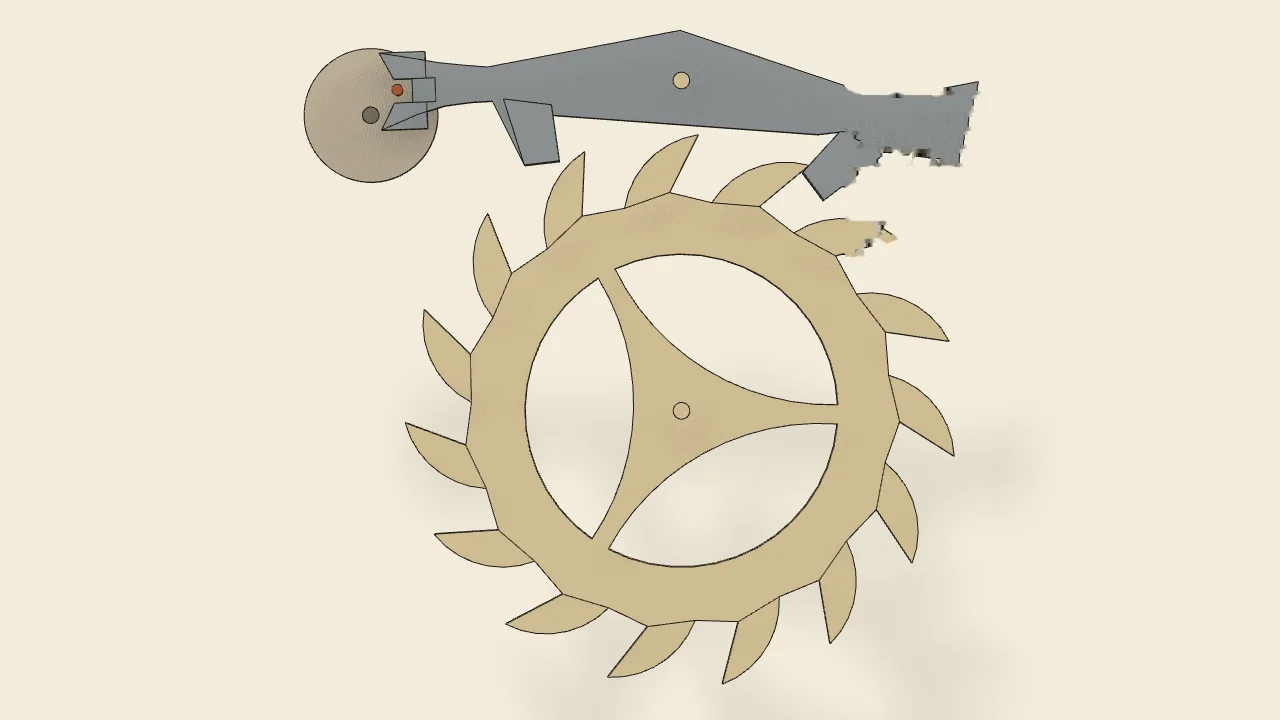 296. Lever escapement
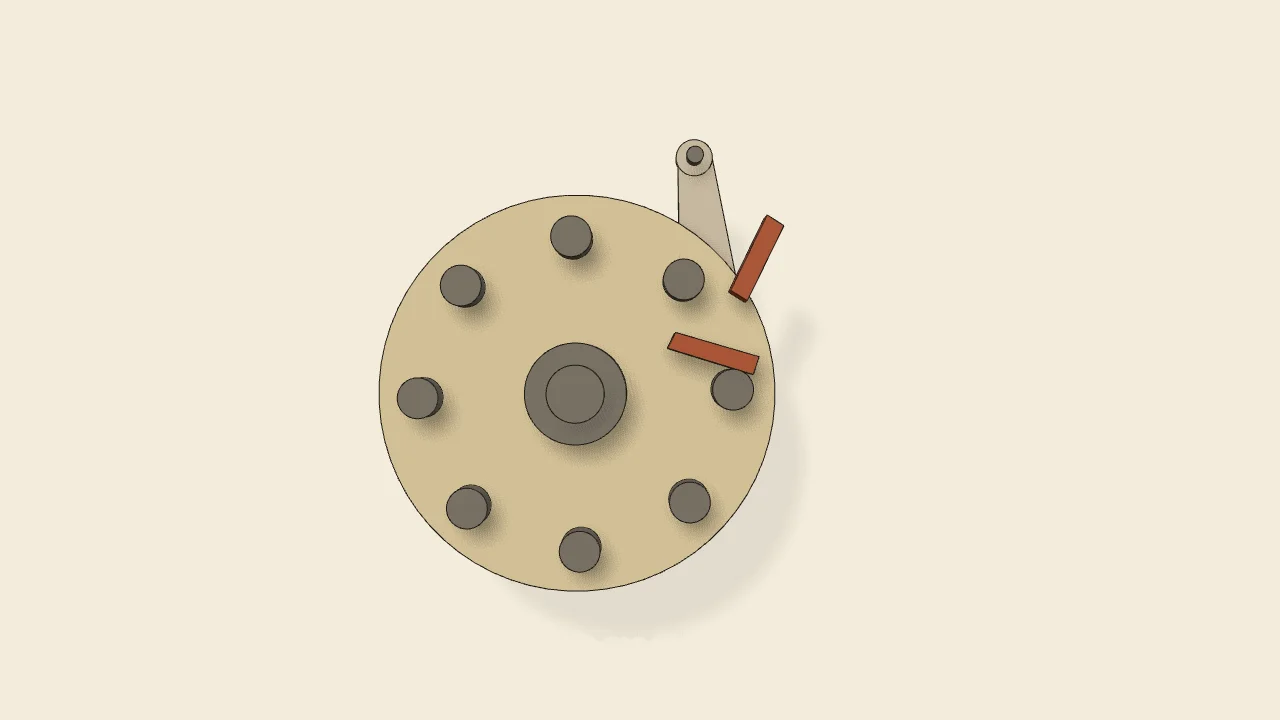 297. Lantern-wheel escapement
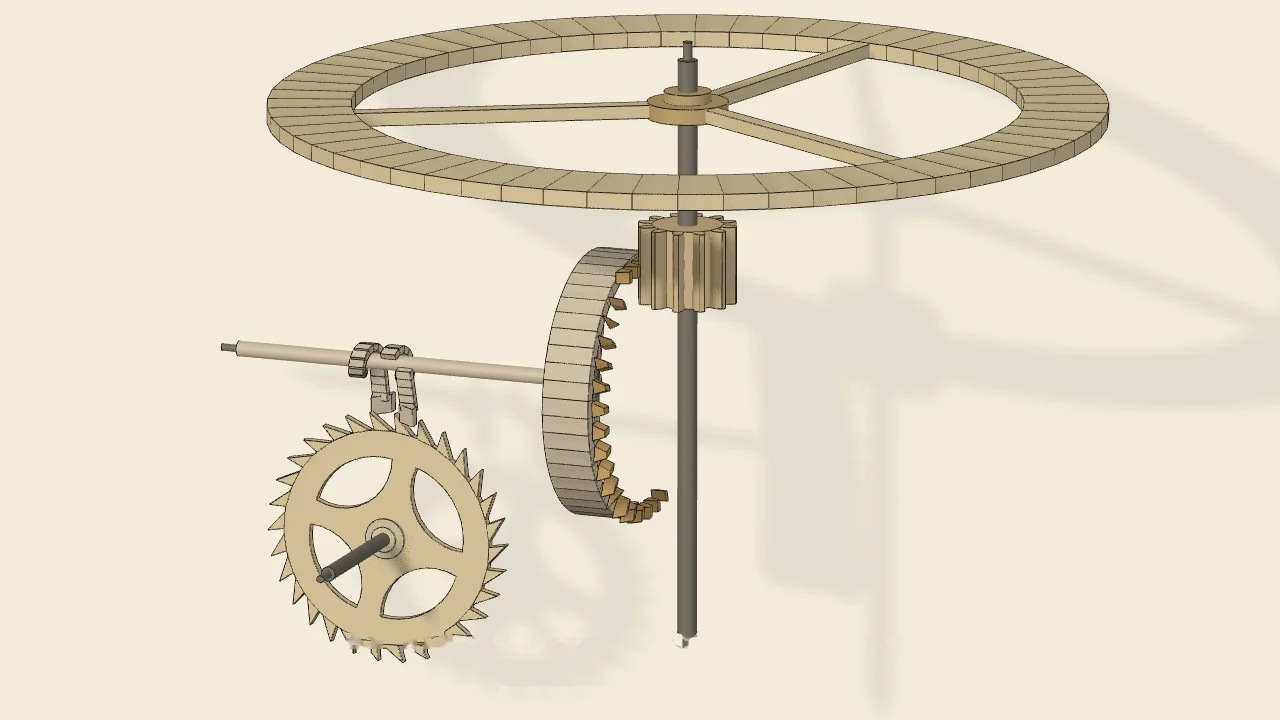 298. An old-fashioned watch escapement
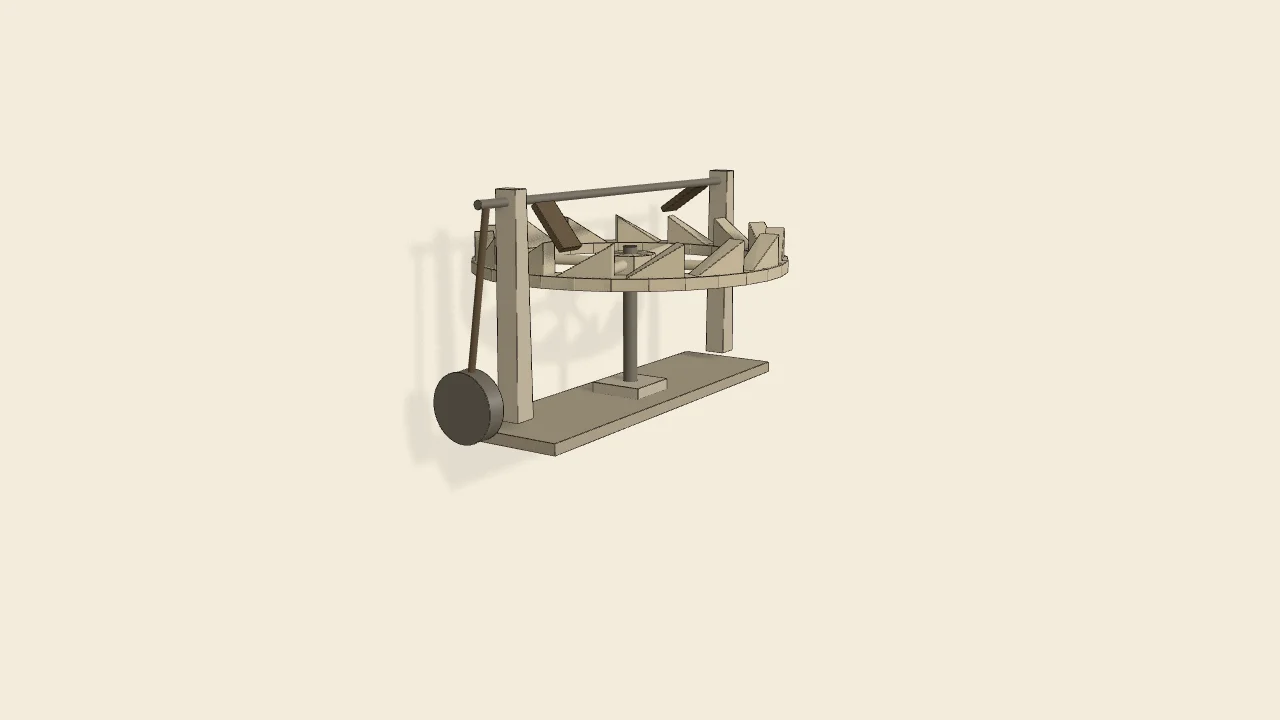 299. An old-fashioned clock escapement
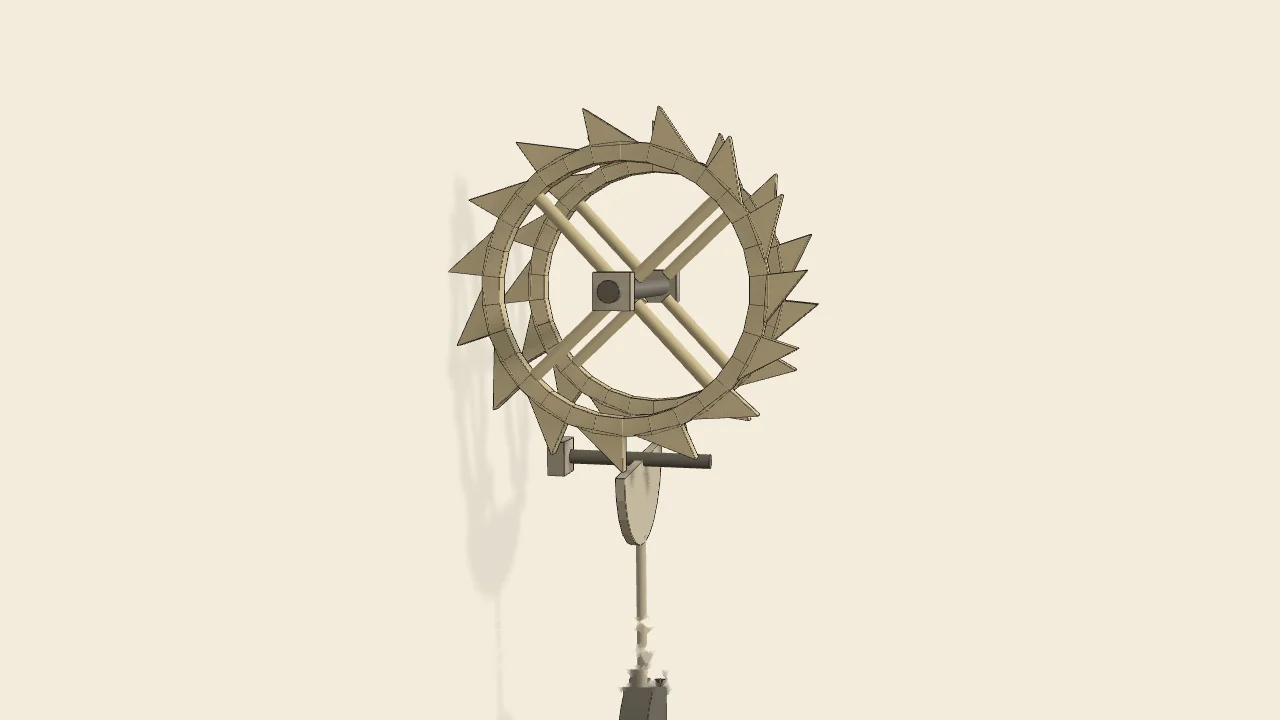 300. Double-wheel escapement (front)
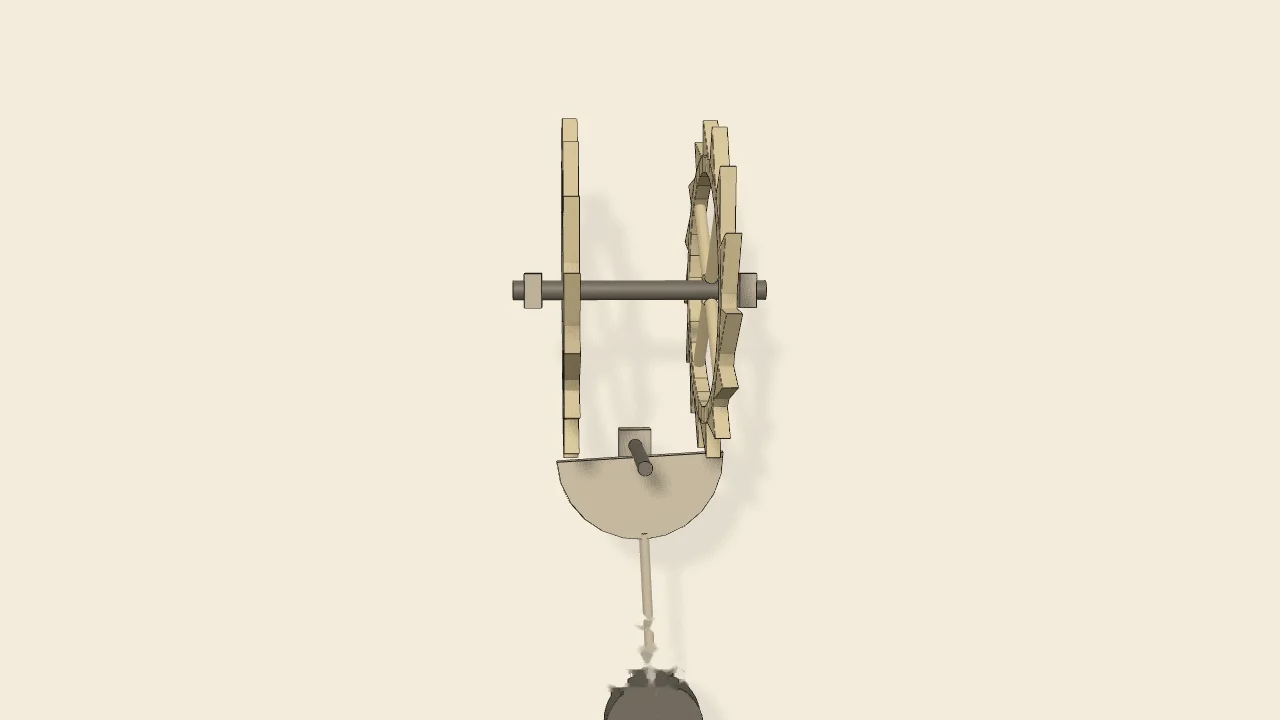 301. Double-wheel escapement (side)
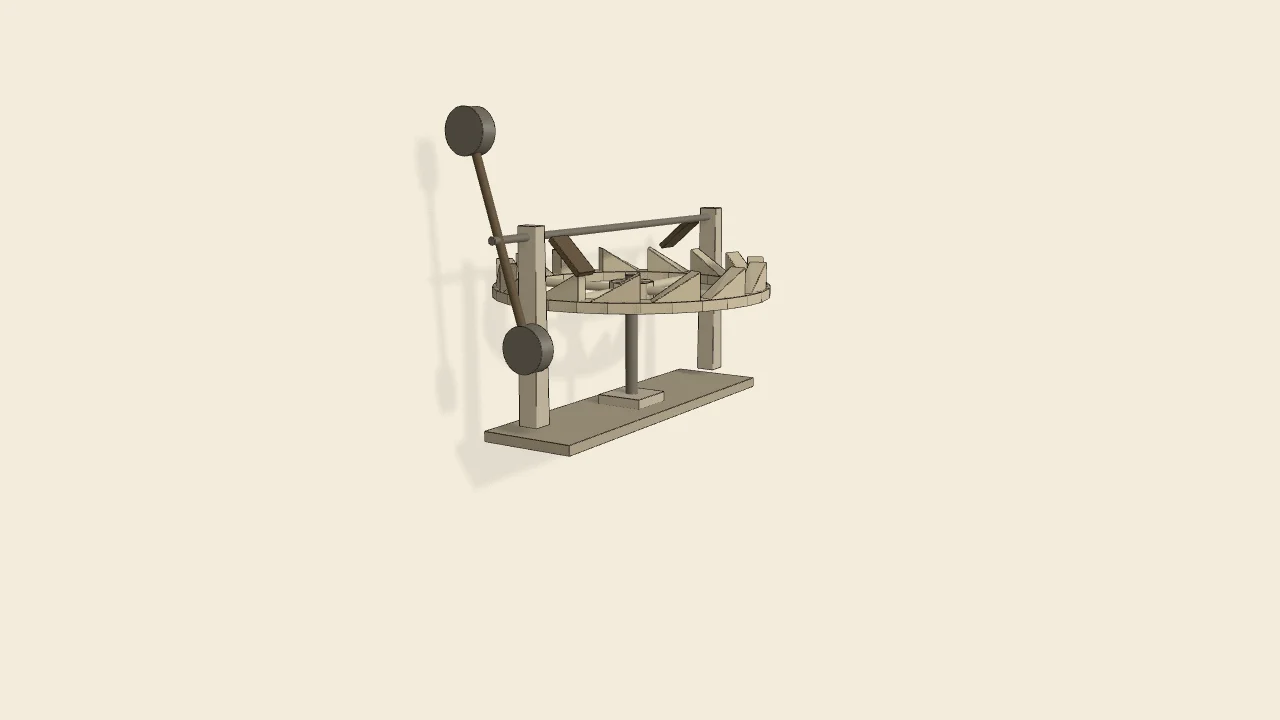 302. Balance-wheel escapement
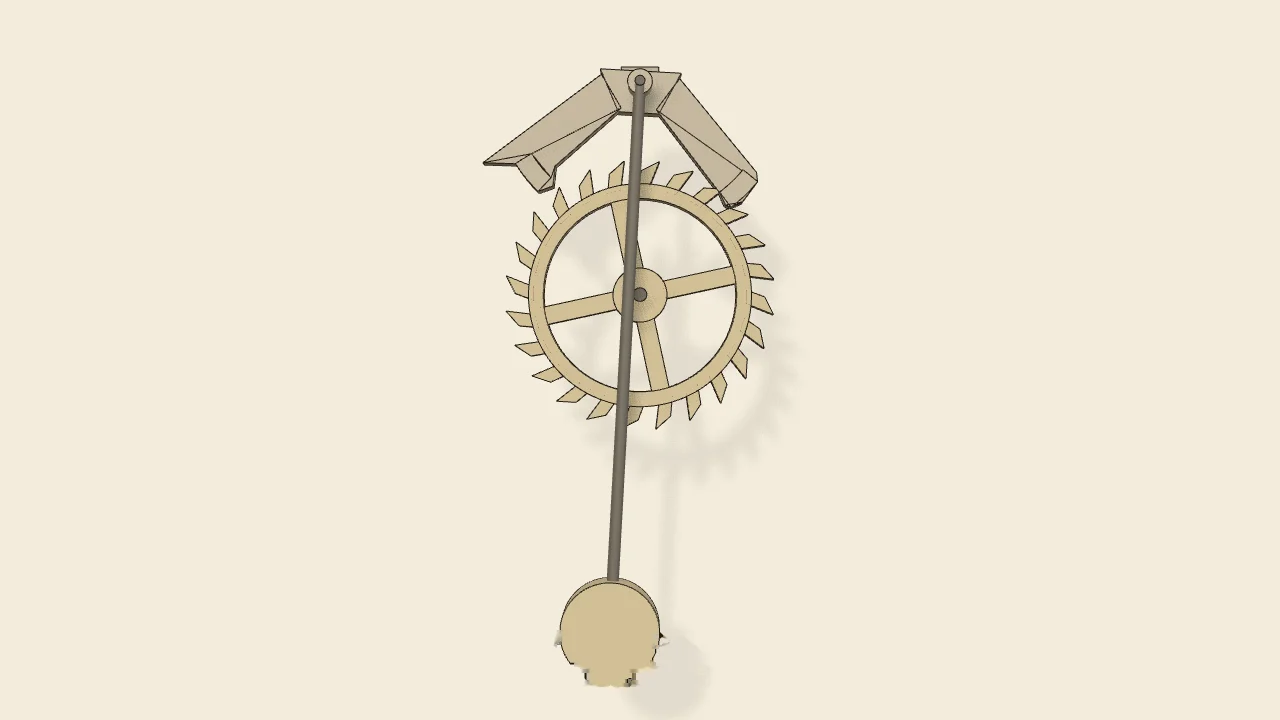 303. Dead-beat pendulum escapement
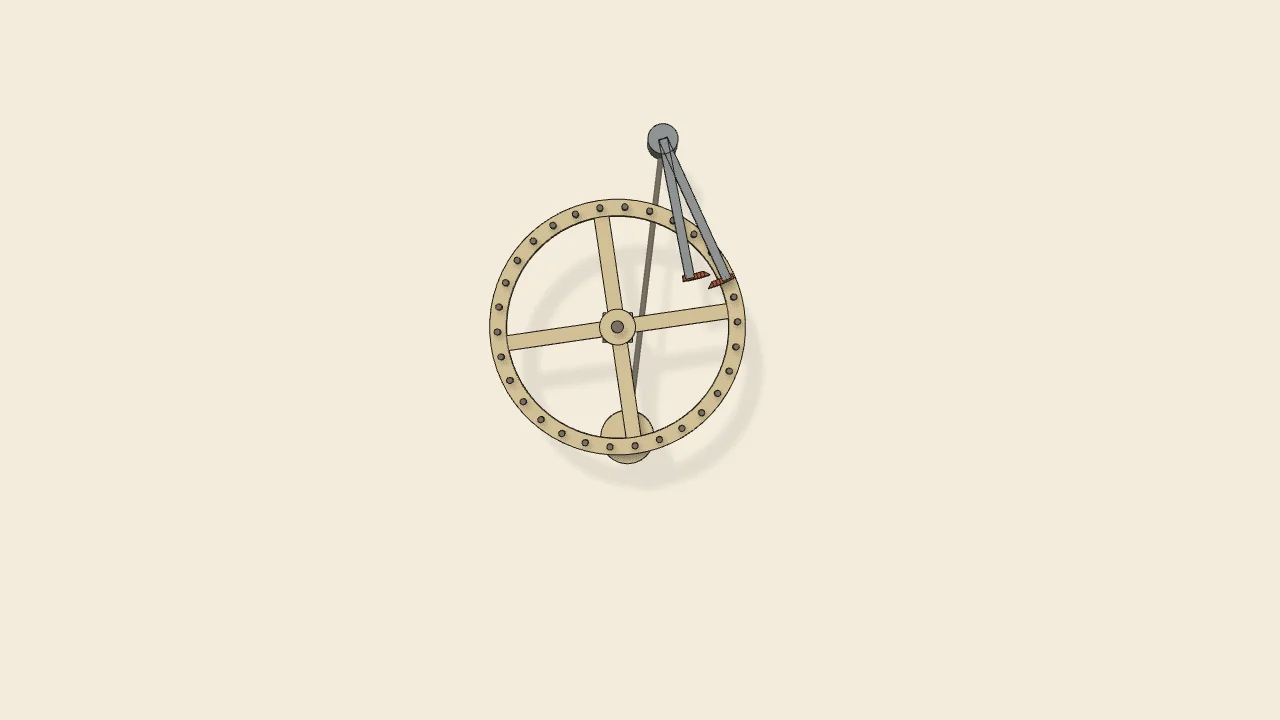 304. Pin-wheel escapement
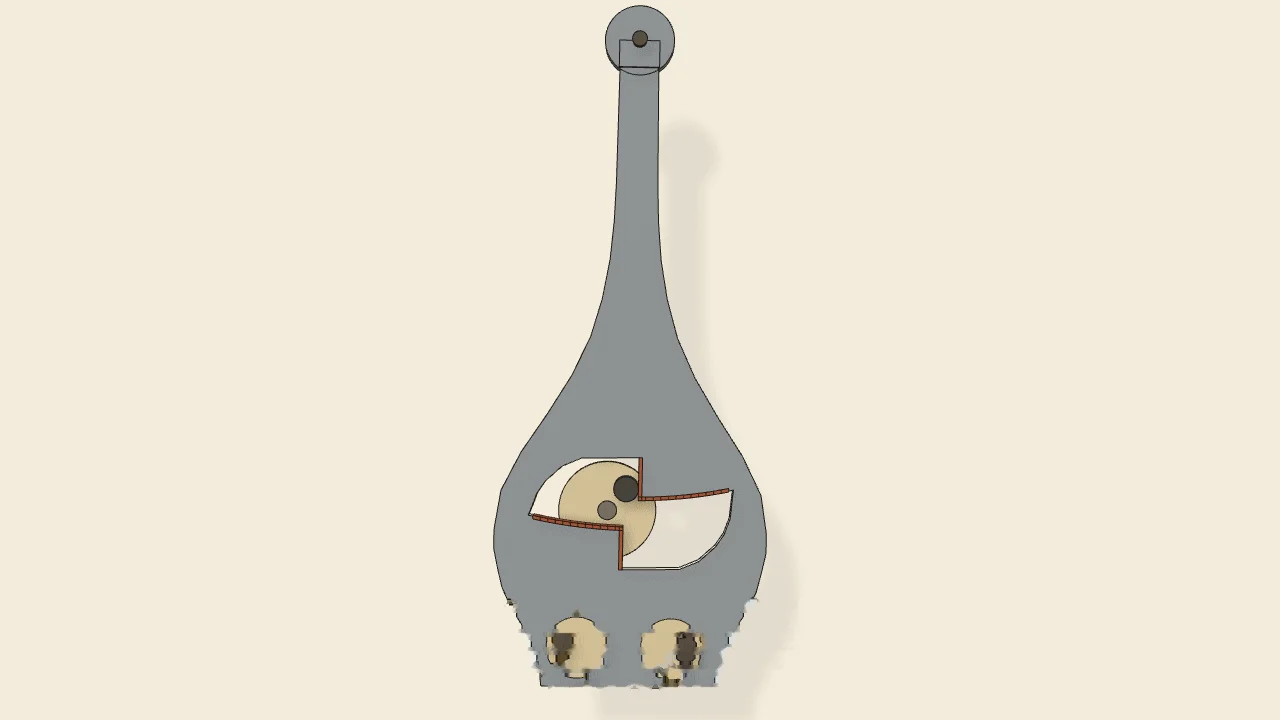 305. Single-pin pendulum escapement
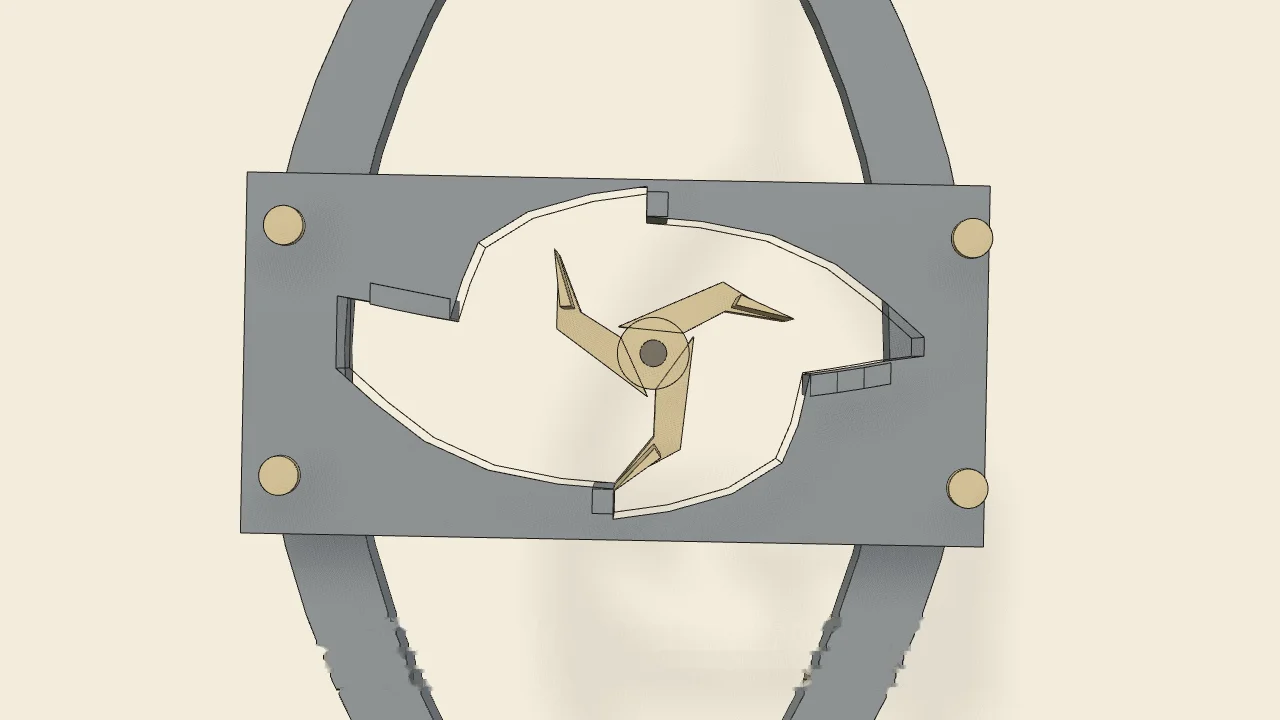 306. Three-legged pendulum escapement
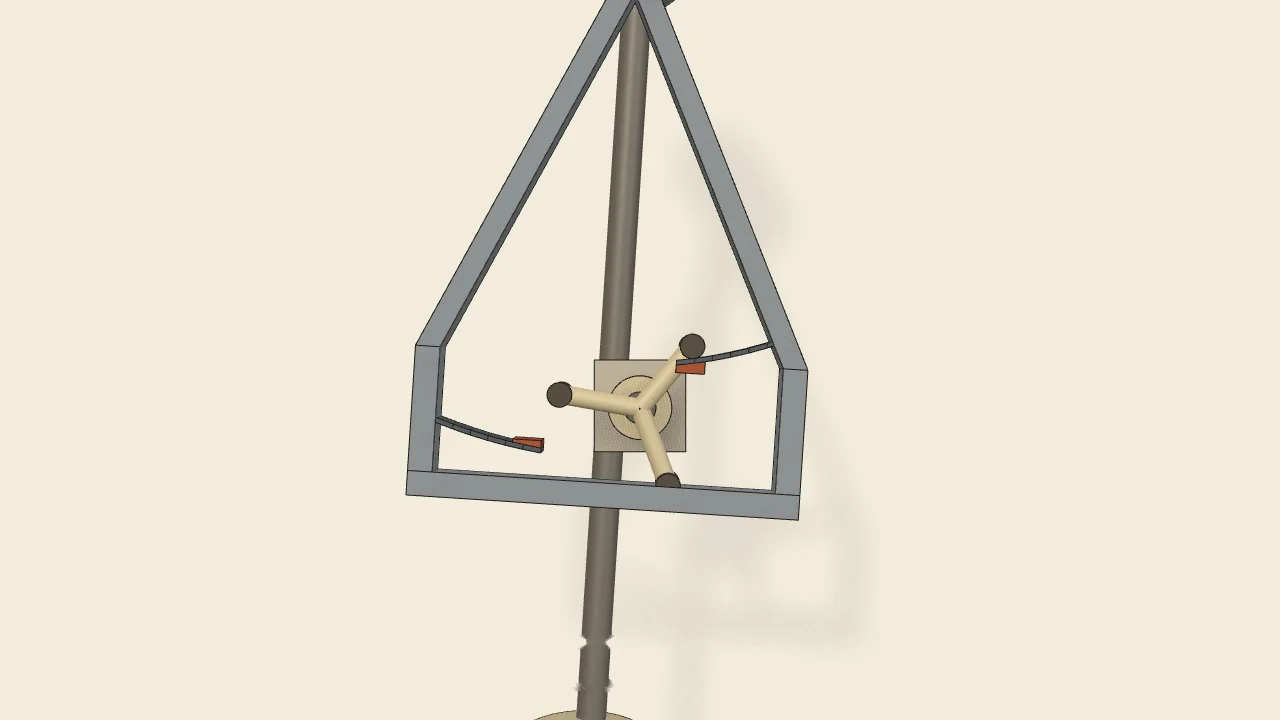 307. Three-legged escapement with stopping teeth
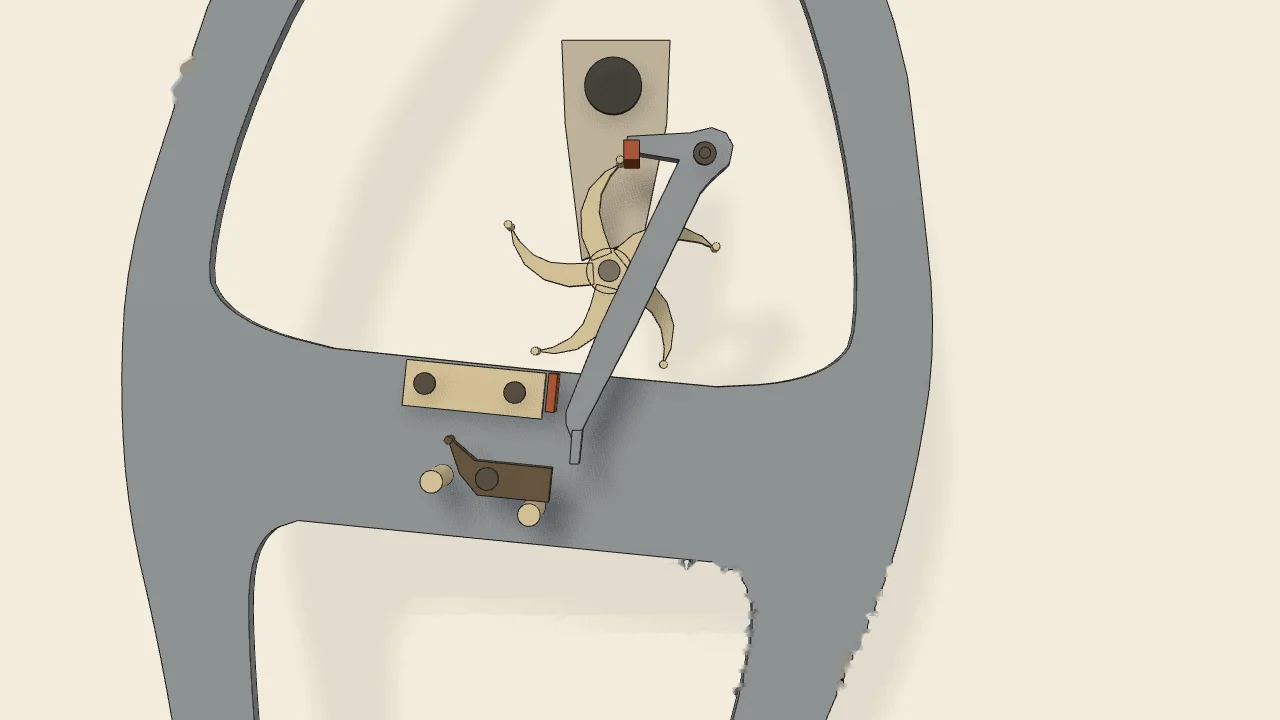 308. Detached pendulum escapement
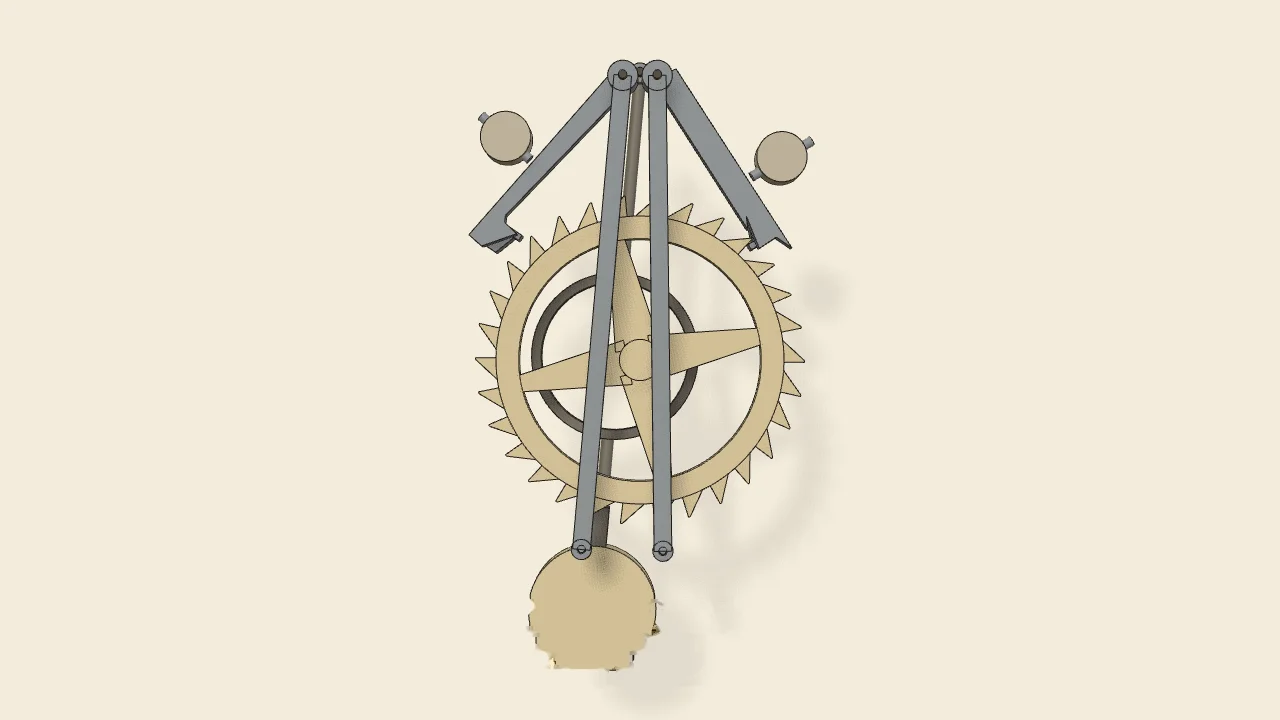 309. Mudge's gravity escapement
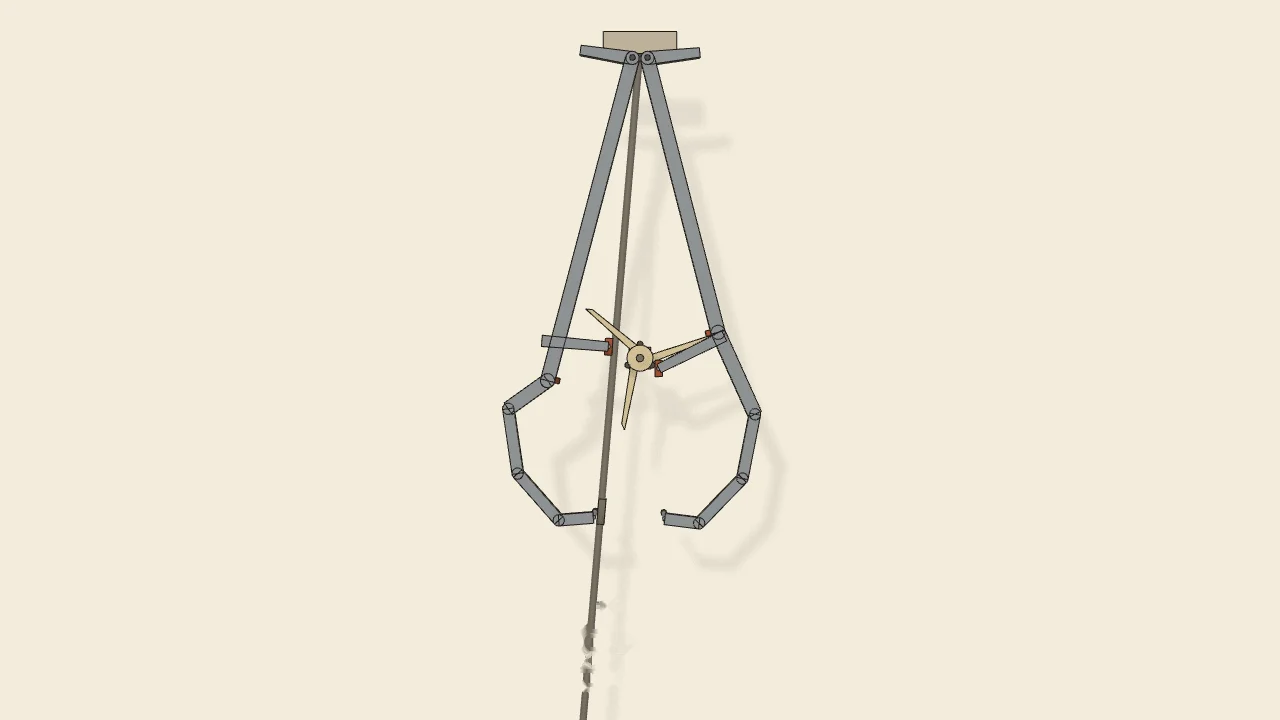 310. Three-legged gravity escapement
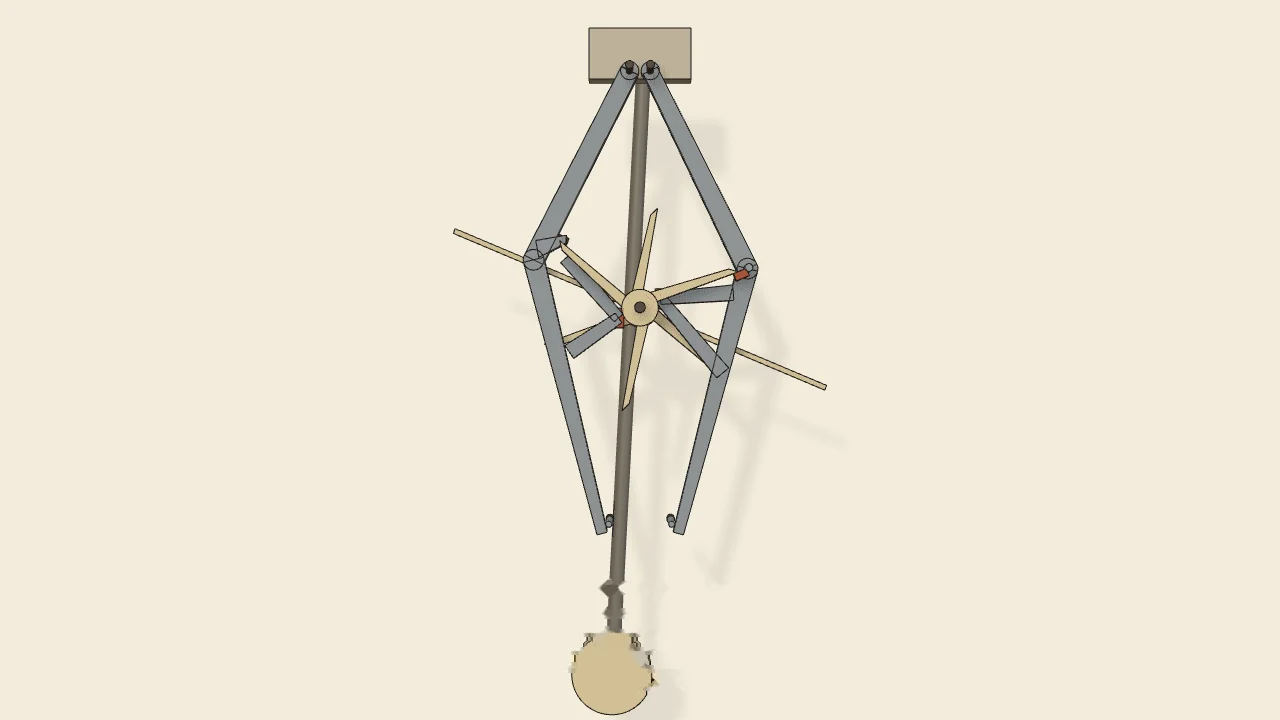 311. Double three-legged gravity escapement
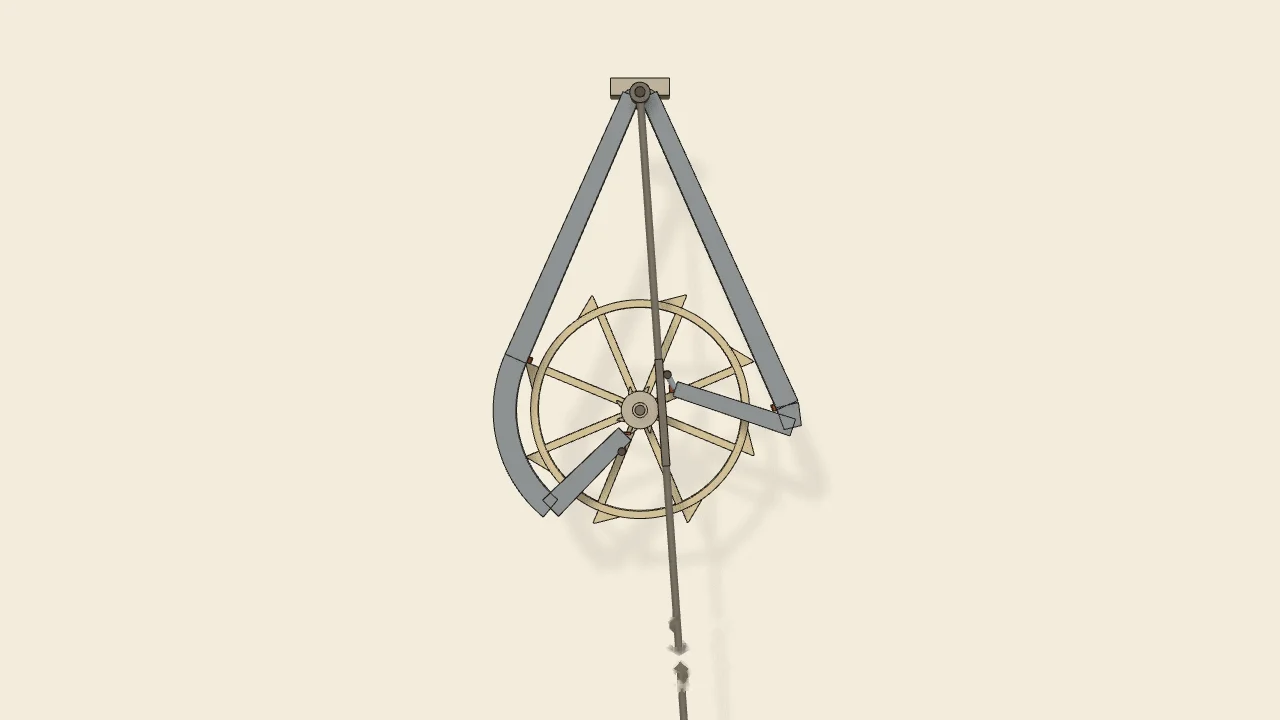 312. Bloxam's gravity escapement
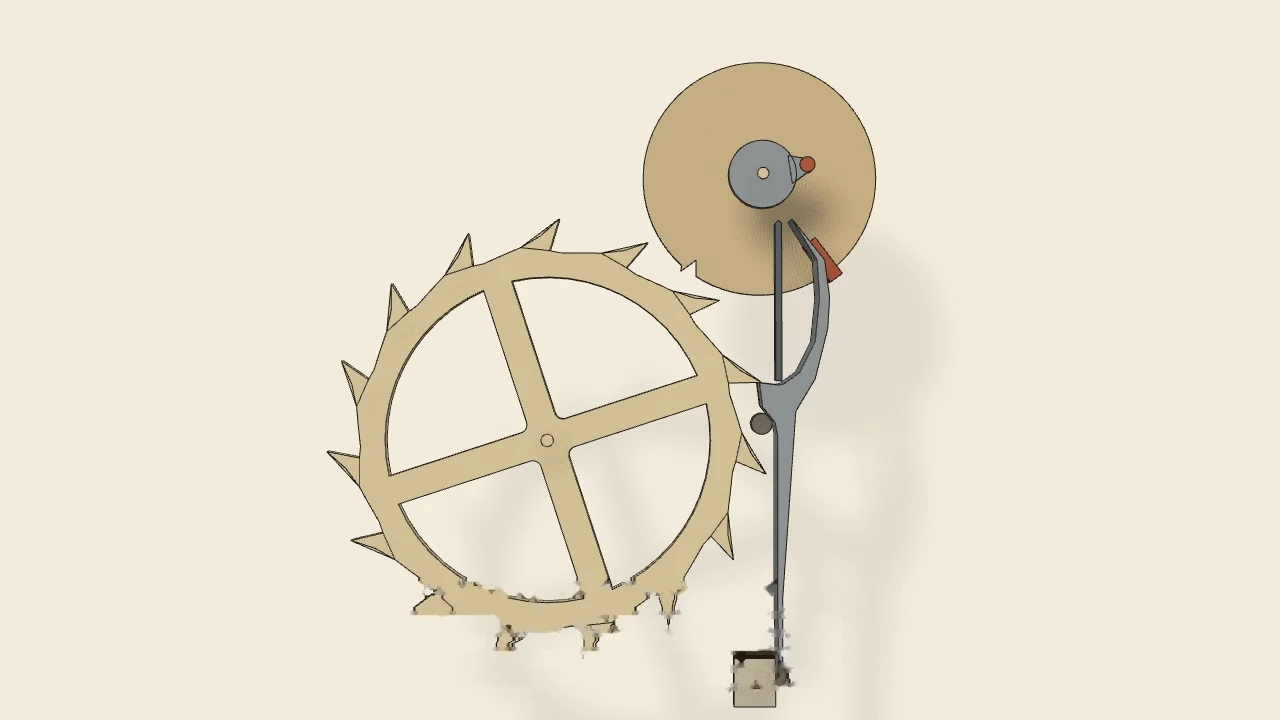 313. Chronometer (detent) escapement
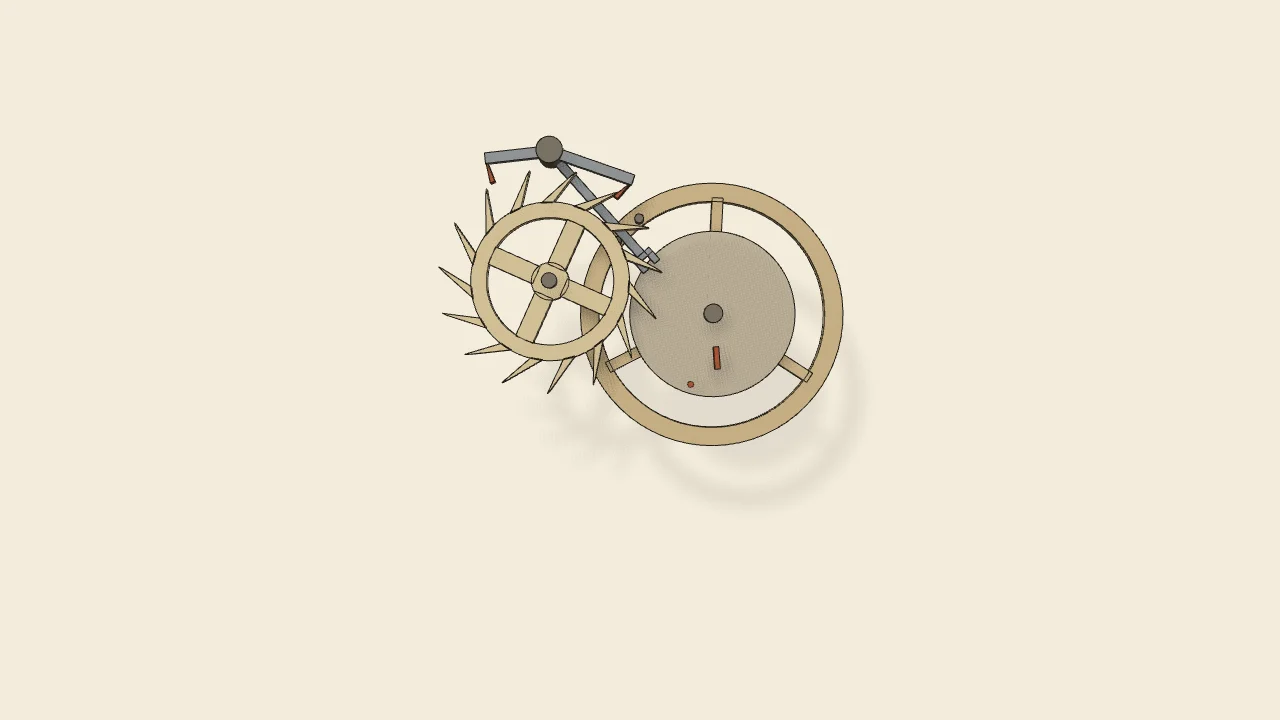 314. Lever chronometer escapement
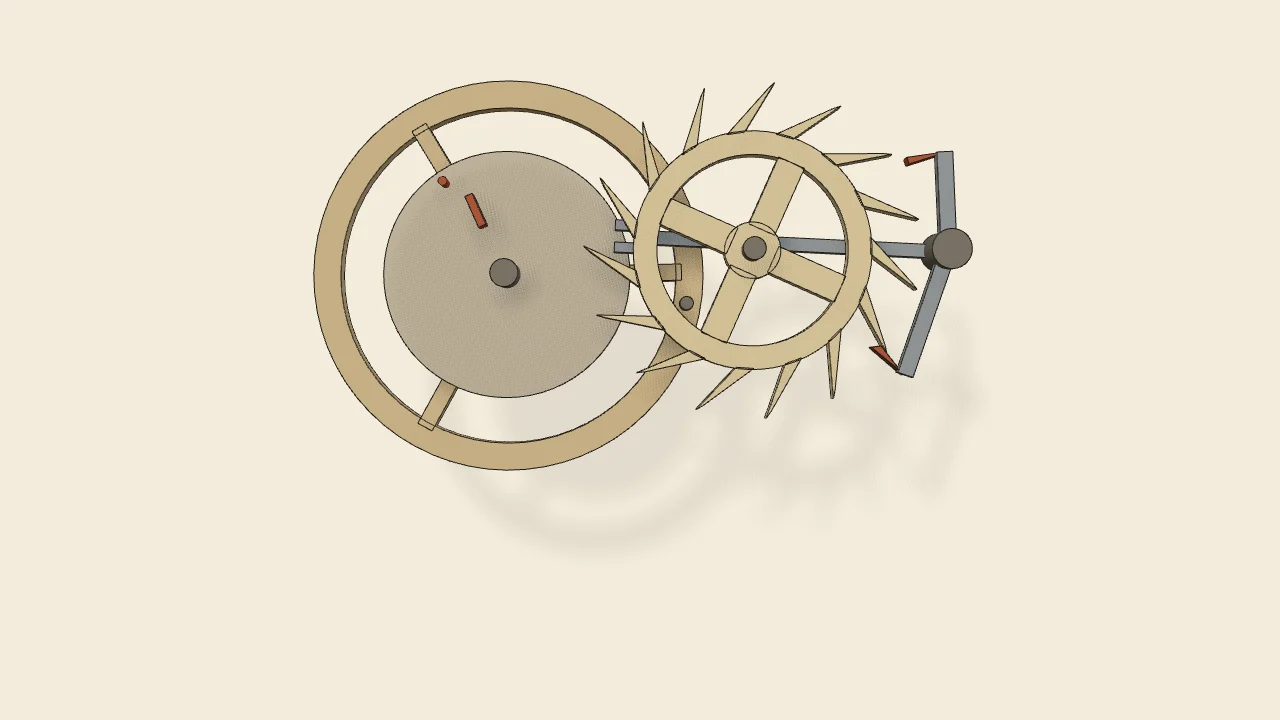 396. Reed's anchor and lever escapement
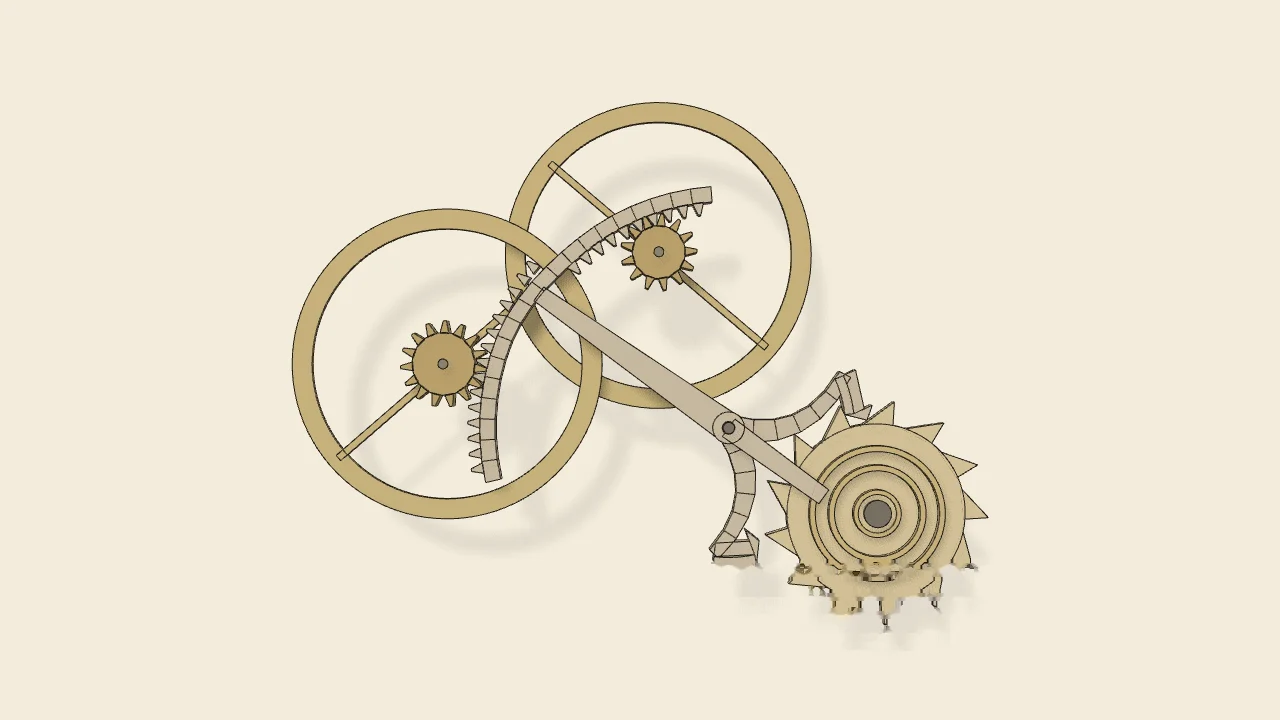 402. Guernsey's twin-balance escapement